4/25/2024
Unlocking Solutions to Water Challenges in New “Our Blue World, A Water Odyssey” Documentary
Discover how P&G's partnerships and innovative solutions help address the global water crisis in the documentary "Our Blue World: A Water Odyssey."
Read more
4/24/2024
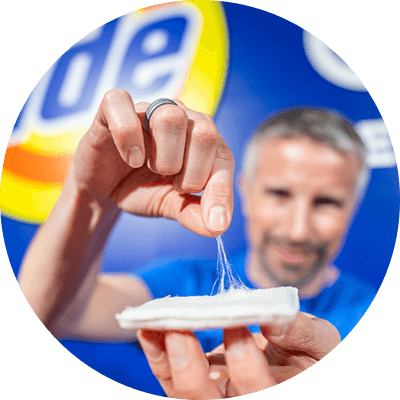
Introducing Tide evo: A Leap Forward in Laundry
A decade of innovation culminates in revolutionary new laundry tile debuted at SXSW 2024.
4/23/2024
Made Better, Made to Save
New P&G survey reveals how everyday tasks add a physical and mental load to people’s already hectic days.
4/20/2024
P&G Announces Results for the Third Quarter of Fiscal Year 2024
P&G reported results for the third quarter of Fiscal Year 2024.
Our brands
Align
Probiotic Supplements
Always
Feminine Care Pads
Always Discreet
Incontinence Pads
Ambi Pur
Odor Eliminators
Ariel
Laundry Products
Aussie
Hair Care
Bounce
Dryer Sheets & Fabric Care
Bounty
Paper Towels
Braun
Personal Grooming
Cascade
Dishwasher Detergent
Charlie Banana
Baby Diapers
Charmin
Toilet Paper
Cheer
Clearblue
Pregnancy & Ovulation Tests
Crest
Dental Care
Dawn
Dishwashing Liquid
Downy
Fabric Protectors & Softeners
Dreft
Baby Detergent & Laundry Products
Era
Febreze
Fixodent
Denture Adhesives
Gain
Laundry & Home Products
Gillette
Razors & Skin Care
Head & Shoulders
Herbal Essences
Ivory
Mildly Scented Soap
joy+glee
Razors, Waxes, & Creams
Just
Feminine Care Pads and Tampons
Luvs
Meta
Daily Fiber Supplements
Microban 24
Home Cleaning Products
Mr. Clean
All-Purpose Home Cleaners
Native
Face & Skin Care
Ninjamas
Nighttime Underwear
Olay
Old Spice
Hair & Skin Care
Oral-B
Toothbrushes & Dental Floss
Pampers
Pantene
Pepto-Bismol
Upset Stomach Relief
Prilosec OTC
Heartburn Relief
Puffs
Facial Tissues
Rindex 3en1
Safeguard
Germ-Protecting Soap
Salvo
Scope
Mouthwash
Secret
Deodorant & Body Spray
SK-II
Anti-Aging Face Care
Swiffer
Multi-Surface Dusters & Cleaners
Tampax
Feminine Care Tampons
The Art of Shaving
This is L
Period & Bladder Care
Tide
Venus
Razors & Shaving Gels
Vicks
Cough, Cold & Flu Relief
Zevo
Insect Repellent
ZzzQuil
Sleep Aid
Careers at P&G
Investor Relations